Office Location is Irving, Texas and Albuquerque, New Mexico
Stay updated on the latest immigration news and policy changes. See what's changed.
Office Location is Irving, Texas and Albuquerque, New Mexico
Published By:

The legal information presented on this page reflects the professional oversight of Attorney John W. Lawit and the attorneys at John W. Lawit, LLC. It is provided for informational purposes only and does not constitute legal advice or create an attorney-client relationship.
At John W. Lawit, LLC, we strive to ensure the information presented here is timely and accurate. For legal guidance specific to your individual case, please contact our firm directly. Nothing in this article should be interpreted as legal advice.
When a person is placed in removal proceedings, the prospect of deportation can feel like a dead end. But there is one form of relief that, if granted, does not just stop deportation. It transforms the person’s status entirely. It is called Cancellation of Removal, and if successful, the respondent walks out of immigration court as a lawful permanent resident.
Cancellation of Removal is one of the most powerful defenses available in immigration court, but it is also one of the most demanding. It requires extensive documentation, careful legal strategy, and an intimate understanding of how immigration judges evaluate these cases.
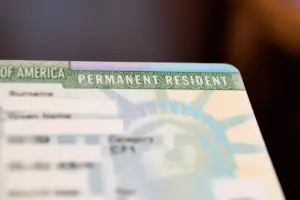 The Immigration and Nationality Act provides for two types of cancellation of removal. Section 42A applies to individuals who already hold lawful permanent resident status (a green card). Section 42B applies to non-permanent residents who have been living in the United States without legal status.
While both lead to the same outcome, permanent residency, the eligibility requirements and the difficulty level are vastly different.
For individuals who already hold a green card, a 42A cancellation requires 5 years of permanent resident status and 7 years of total physical presence in the United States. This is considered one of the most generous provisions in immigration law. The statute forgives many issues that would normally result in removal, precisely because the person has been a permanent resident for a significant period.
To illustrate just how generous 42A can be, I once represented a client who had been convicted of smuggling a substantial quantity of drugs across the border from Mexico. He was a permanent resident, and I met him while he was in jail. Through careful advocacy, the U.S. government ultimately supported his 42A application, acknowledging the assistance he had provided to federal authorities. He was allowed to remain in the United States.
Cases like this are rare, and 42A cases in general are uncommon; many immigration judges go through their entire careers without hearing one. But when the circumstances align, 42A offers extraordinary relief.
Section 42B is far more common in immigration courts, but it is also far more difficult to win. The requirements include ten years of continuous physical presence in the United States, demonstrated good moral character, and a qualifying relative (a U.S. citizen or lawful permanent resident spouse, parent, or child) who would suffer exceptional and unusual hardship if the respondent were deported.
That hardship standard, exceptional and unusual, is the highest threshold in immigration law. It is not enough to show that removal would be inconvenient, disruptive, or even painful. The applicant must demonstrate that the hardship to their qualifying relative rises to a level that is genuinely exceptional and unusual compared to what would normally be expected in a deportation situation.
The good moral character requirement for 42B is enforced with extraordinary strictness. A single DWI conviction from 25 years ago can be enough to disqualify someone from 42B relief. The applicant must have a spotless criminal record, essentially, the absence of any negative acts such as criminal convictions, fraud, or misrepresentation.
On the positive side, applicants can affirmatively demonstrate good moral character through community involvement. Volunteering at church, participating in local organizations, and contributing to the community are all factors that help build the case. But make no mistake: any criminal history will be scrutinized intensely.
Cancellation of removal cases often take years to work through the system. During that time, circumstances change. Sometimes for the better, sometimes for the worse. A qualifying relative whose serious illness was central to the hardship claim may pass away, effectively eliminating that argument. New evidence of hardship may also emerge that needs to be submitted.
The good news is that evidence can continue to be filed up until two weeks before the individual hearing. This means attorneys must stay actively engaged in the case, supplementing the record as circumstances evolve. In my practice, it is common for cancellation applications to grow to several hundred pages by the time they are filed with the court.
If you are facing removal proceedings and believe you may qualify for cancellation of removal, contact John W. Lawit, LLC for a thorough evaluation of your case. With more than four decades of experience in immigration court, we know what it takes to build a winning application.