Office Location is Irving, Texas and Albuquerque, New Mexico
Stay updated on the latest immigration news and policy changes. See what's changed.
Office Location is Irving, Texas and Albuquerque, New Mexico
Published By:
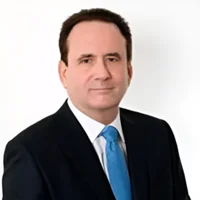
The legal information presented on this page reflects the professional oversight of Attorney John W. Lawit and the attorneys at John W. Lawit, LLC. It is provided for informational purposes only and does not constitute legal advice or create an attorney-client relationship.
At John W. Lawit, LLC, we strive to ensure the information presented here is timely and accurate. For legal guidance specific to your individual case, please contact our firm directly. Nothing in this article should be interpreted as legal advice.
Quick Summary: Understanding the O-1 Extraordinary Ability Visa
Need immediate help? Contact John W. Lawit, LLC.
 Picture a biomedical researcher with a dozen published studies and standing invitations to review manuscripts for her field’s leading journal. The compensation is well above what her peers earn. But if you ask her whether she qualifies for the O-1 extraordinary ability visa, she will probably answer “no.” This might be because she has never won a national prize, and her name means little outside her subfield.
That reaction is common because “extraordinary ability” can sound like a standard reserved for famous people or major award winners. In reality, the O-1 is a temporary U.S. work visa for people who can demonstrate extraordinary ability or achievement in their field through qualifying evidence. You do not have to be a household name to potentially qualify. This article explains what USCIS actually requires and how to take an honest look at your own record.
The O-1 question often comes up when a career reaches a point where the usual immigration options no longer fit. A software engineer may have three granted patents but lose the H-1B lottery again. A founder may close a funding round and realize her status expires before her product is ready to launch. For someone in the arts, it might come after two festival selections and an offer to direct a U.S.-produced series.
They have different details, but the question is often the same: is there another way to keep working in the United States? The O-1 is one of the employment-based visa options available to people who want to work in the country. Because a U.S. employer or agent must file the petition, finding a willing O-1 visa sponsor is often one of the first practical hurdles.
It is easy to look at someone else’s career and think that your own record does not measure up. Maybe they have major awards, hundreds of citations, or a name everyone in the field recognizes. That comparison can make a strong candidate overlook what is already in their own record.
For example, you might not think much of a peer review invitation because it was simply part of your work. You might also forget about serving on a selection committee years ago or assume that a long resume speaks for itself. For the O-1 extraordinary ability visa, however, those details can matter when they fit the applicable criteria and are backed by evidence.
The O-1 visa has two classifications. O-1A visa requirements apply to the sciences, education, business, and athletics. O-1B covers the arts, including motion picture and television work. Both are based on the same statutory definition of extraordinary ability. The O-1 is also one of several non-immigrant visa categories that allow qualifying individuals to work in the United States for a defined period, with the option to extend.
The two classifications use different evidentiary standards. O-1A applicants must show sustained national or international acclaim, while O-1B applicants in the arts must show distinction. In this context, distinction means a level of skill and recognition substantially above what is ordinarily encountered. The classification that applies to you depends on your field, and that determines which criteria you need to meet.
An O-1A petition generally must meet three of eight criteria under the O-1 regulations. Applicants who have received a major, internationally recognized award may qualify without meeting three criteria. These are the O-1 visa eligibility criteria:
Meeting three criteria alone does not guarantee approval. USCIS first checks whether your evidence meets the criteria, then looks at the petition as a whole.
The O-1B visa for artists applies to people working in the arts, including film and music. Its criteria are different from the O-1A requirements and focus more on the recognition and standing a person has earned through their work. For example, an applicant may point to a leading role in a production or published reviews of their work.
Fame is not the test. The regulations focus on distinguished achievement supported by evidence, and that recognition can take different forms across professions. A researcher whose method is used by labs on three continents may have evidence of significant contributions even if no reporter has ever written about her. The O-1 does not require you to be a household name or widely recognized outside your field.
Other assumptions can also create the wrong picture of who qualifies. Some applicants believe they need a doctorate, though no specific degree is required. Others think the O-1 demands a permanent job offer, when project-based work through a U.S. agent is common in the arts. A denial in a different visa category also does not necessarily prevent an O-1 case because extraordinary ability immigration has its own eligibility standards.
With more than 40 years in practice, John W. Lawit has seen how often accomplished professionals have records that meet the O-1 standard without fitting the popular idea of what “extraordinary” looks like.
How you present a record matters nearly as much as what it contains. O-1 visa evidence requirements call for clear and specific documentation. Too much irrelevant material can weaken the presentation. What matters is that the officer will see how each piece of evidence is relevant to the case.
Take note that recommendation letters can create problems when they are too general. They are weak if they come from people with limited standing in the field. A recognized figure who can explain why the applicant’s work matters may provide stronger support. One strong year may also be insufficient to show the sustained acclaim required for an O-1.
Some requirements need attention early in the process. Most petitions require an advisory opinion letter, which can take time to obtain. When a standard criterion does not fit a profession, the comparable evidence standard may allow other evidence of similar significance.
USCIS adjudication looks at what each piece of evidence actually shows. For example, membership in an association may help when the group only accepts people with strong achievements, but simply paying a fee to join usually does not. Publications and peer group recognition can also help when they come from respected sources in the applicant’s field.
The type of evidence that supports beneficiary qualifications depends on the person’s work. A data scientist may point to important work at a recognized company, while a biotech researcher may rely more on published research and citations. Someone applying for an O-1B visa for artists may have evidence such as juried selections or reviews of their work.
The O-1 visa petition process begins when a U.S. employer or agent files the Form I-129 petition with USCIS. The I-129 petition cannot be filed more than one year before the work begins, and USCIS advises filing at least 45 days before the start date. Gathering supporting letters and securing the advisory opinion can take time, so it helps to start preparing months in advance.
Unlike some employment-based routes, the O-1 does not require Department of Labor certification. An O-1 visa attorney consultation can help identify gaps in your record before you begin gathering evidence. John W. Lawit is licensed to practice in New Mexico, Texas, Pennsylvania, and Canada and works with professionals on O-1 matters under the same federal standard.
Generally, you have to meet at least three of the eight requirements. A person who has gotten a well-known award from around the world might be eligible without meeting three requirements. Even if you do meet USCIS, what happens is that it still looks at the application before making a choice.
Yes. An award is only one of the eight O-1 visa eligibility criteria, so you do not need one to have a viable case. Other evidence may show your recognition in the field, such as work you have been asked to judge or significant contributions you have made.
The answer usually comes down to your field and the work you will be doing in the United States. O-1A covers the sciences, education, business, and athletics. On the other hand, O-1B covers the arts, including motion picture and television. If your work crosses into more than one area, then an attorney can help determine which classification fits your position and evidence.
An honest evaluation is worth more than a guess in either direction. If you have questions about whether your achievements may satisfy the O-1 extraordinary ability visa standard, John W. Lawit, LLC can review your record and identify which O-1 visa eligibility criteria your evidence supports. Call (214) 609-2242 to arrange a consultation.