Office Location is Irving, Texas and Albuquerque, New Mexico
Concerned about immigration issues following President Donald Trump's re-election? Click Here
Office Location is Irving, Texas and Albuquerque, New Mexico
Last Updated: December 2025
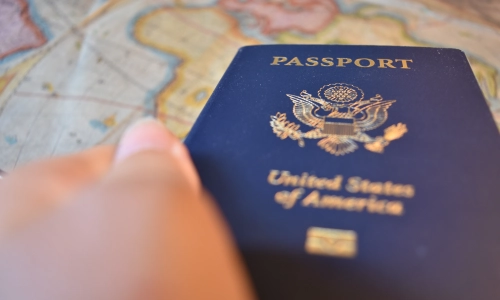 On December 16, 2025, President Donald Trump signed a proclamation significantly expanding travel restrictions affecting nationals from dozens of countries. The measure represents one of the most extensive modifications to U.S. immigration entry policy in recent years, building upon restrictions initially established during Trump’s first term and restored earlier in 2025.
This is a comprehensive overview of the new restrictions, their scope, stated rationales, and practical implications for affected individuals.
The proclamation builds on Proclamation 10949, issued in June 2025, which had restored travel restrictions from the Trump administration’s first term while incorporating updated security assessments. The legal authority for such restrictions stems from the Immigration and Nationality Act, which grants the president broad power to suspend or restrict entry of foreign nationals when their entry would be “detrimental to the interests of the United States.”
During Trump’s first term, similar travel restrictions faced multiple legal challenges but were ultimately upheld by the Supreme Court in 2018. The Court ruled that such restrictions fall “squarely within the scope of Presidential authority” when premised on legitimate national security purposes, specifically citing the goals of preventing entry of individuals who cannot be adequately vetted and encouraging other nations to improve their information-sharing practices.
The new Proclamation establishes two categories of restrictions:
Nationals from the following countries face full entry restrictions:
The proclamation maintains full restrictions on twelve countries that were already subject to such measures under the June 2025 order.
Five additional countries have been added to the full restriction category based on what the administration describes as recent security analysis.
Two countries previously under partial restrictions have been elevated to full restriction status.
The proclamation also extends full restrictions to individuals traveling on documents issued by the Palestinian Authority.
Nationals from these countries face restrictions on immigrant visas and nonimmigrant visas in the B-1, B-2, B-1/B-2, F, M, and J categories. Other visa categories (such as work visas, diplomatic visas, etc.) are not affected by these partial restrictions.
Four countries continue under partial restrictions that were established in the June 2025 proclamation. Nationals of these countries face limitations on immigrant visas and the specified nonimmigrant categories while retaining access to other visa types.
The December proclamation adds fifteen countries to the partial restriction category, representing the largest single expansion of the restricted list.
The justifications offered for these additions vary considerably. For most African nations on the list, the administration points to visa overstay statistics, with rates cited ranging from approximately 4 percent for Senegal’s B-1/B-2 category to nearly 39 percent for The Gambia’s student and exchange visitor category.
Several countries are also noted for historically refusing to accept the return of their deported nationals.
Two Caribbean nations, Antigua and Barbuda and Dominica, appear on the list for a distinct reason. The administration cites its Citizenship by Investment programs, which allow individuals to obtain citizenship without establishing residency.
The concern expressed is that such programs may enable individuals to obscure their true identity or circumvent vetting requirements that would otherwise apply based on their country of origin.
Nigeria’s inclusion merits particular attention given its large population and significant diaspora in the United States. The administration cites the presence of terrorist organizations including Boko Haram and Islamic State affiliates operating in parts of the country, along with overstay rates of approximately 5.5 percent for tourist and business visas and nearly 12 percent for student and exchange categories.
In one notable exception to the pattern of expanding restrictions, Turkmenistan has seen a partial easing of limitations. The administration states that since the June 2025 proclamation, Turkmenistan has engaged productively with U.S. officials and demonstrated significant progress in improving identity management and information-sharing procedures.
As a result, the suspension on nonimmigrant visas in the B-1, B-2, F, M, and J categories has been lifted for Turkmen nationals. However, restrictions on immigrant visas remain in place pending further progress.
The proclamation includes several categories of exemptions.
Lawful permanent residents of the United States, commonly known as green card holders, are not subject to the restrictions regardless of their country of citizenship. Individuals who already hold valid visas obtained before the proclamation took effect may generally still use those visas, though the specifics can be complex and may warrant consultation with legal counsel.
Certain visa categories carry built-in exemptions. Diplomats traveling on appropriate credentials, athletes entering for competition purposes, and other specified categories face different treatment than general travelers.
Additionally, individuals may request case-by-case waivers if they can demonstrate that their entry would not pose a security risk and would serve U.S. national interests.
The proclamation does narrow some family-based immigrant visa exceptions that existed under prior versions of the travel restrictions, citing what the administration describes as demonstrated fraud risks in those categories.
Immigration policy remains subject to ongoing legal challenges, administrative modifications, and potential legislative action. The scope and duration of these restrictions may change based on court rulings, diplomatic developments, or future executive action.
Affected individuals and their families should monitor official government sources for updates and consider establishing relationships with qualified immigration legal counsel who can provide guidance tailored to their specific situations.
The December 2025 proclamation represents a significant expansion of U.S. travel restrictions, affecting nationals from roughly 40 countries and territories to varying degrees. Whether viewed as a necessary security measure or an overly broad restriction, its practical effects will be felt by millions of potential travelers and their connections to the United States.
For those seeking legal assistance:
Facing uncertainty with the new U.S. travel restrictions? The complexities of the December 2025 proclamation can jeopardize your plans for entry, residency, or travel.
Whether you are a green card holder, a dual citizen, or an applicant from a newly restricted country, understanding your specific exemptions and options for waivers is crucial. John W. Lawit, LLC specializes in navigating the intricacies of travel restrictions and immigration law.
Don’t risk denial or deportation by misinterpreting these vital changes—contact us today for a confidential consultation to secure your path forward. Call us now at (214) 609-2242.
This information is provided for educational purposes. For advice about your individual situation, please consult with a licensed immigration attorney.