Office Location is Irving, Texas and Albuquerque, New Mexico
Stay updated on the latest immigration news and policy changes. See what's changed.
Office Location is Irving, Texas and Albuquerque, New Mexico
Published By:
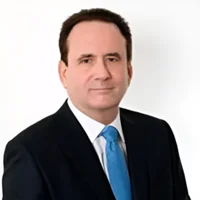
The legal information presented on this page reflects the professional oversight of Attorney John W. Lawit and the attorneys at John W. Lawit, LLC. It is provided for informational purposes only and does not constitute legal advice or create an attorney-client relationship.
At John W. Lawit, LLC, we strive to ensure the information presented here is timely and accurate. For legal guidance specific to your individual case, please contact our firm directly. Nothing in this article should be interpreted as legal advice.
A federal judge has struck down a U.S. government policy that restricted the issuance of immigrant visas to nationals of 75 countries, finding that the policy exceeded the Secretary of State’s legal authority and was contrary to federal law.
In a 61-page decision, U.S. District Judge Jeannette A. Vargas of the Southern District of New York ruled against the government’s policy, which had been characterized as a temporary “pause” in immigrant visa processing for certain nationalities based on concerns that applicants could become dependent on public benefits in the United States.
Court Rejects Blanket Approach to Public Charge Determinations
A central issue in the case was the government’s approach to determining whether an intending immigrant was likely to become a “public charge.”
Federal immigration law permits consular officers to consider whether an applicant is likely to become primarily dependent on the government for subsistence. However, these determinations generally require consideration of the individual applicant’s circumstances rather than the application of a blanket rule based solely on nationality.
According to the court, the challenged policy effectively required consular officers to refuse immigrant visas to individuals from the affected countries even when applicants could demonstrate that they were financially self-sufficient and otherwise eligible for their visas.
Evidence presented in the litigation included a State Department cable instructing consular officers to continue refusing visas under the policy even when an applicant submitted additional evidence demonstrating that the public-charge concern had been overcome.
Judge Vargas concluded that this approach conflicted with federal immigration law because it replaced the individualized assessment required by statute with a categorical policy applicable to nationals of the designated countries.
Who Was Affected by the Policy?
The State Department policy applied to nationals of 75 countries across several regions, including Africa, Latin America, the Caribbean, Eastern Europe, Southeast Asia, and the Middle East.
The lawsuit was brought on behalf of individuals directly affected by the restrictions, including U.S. citizens seeking immigrant visas for relatives abroad. The plaintiffs included U.S. citizens whose relatives in Ghana, Jamaica, Guatemala, and Ethiopia allegedly could not obtain immigrant visas because of the policy.
The case also included professionals from Colombia whose visa applications were reportedly refused under the challenged policy.
What Happens to Previously Denied Visa Applications?
Importantly, the court’s ruling extends beyond stopping future enforcement of the policy. The decision also reverses visa refusals that were based solely on the challenged policy.
As a result, individuals whose immigrant visa applications were previously refused solely because of the policy may potentially have their cases reconsidered. The decision could therefore affect a significant number of applicants whose cases were impacted while the policy was in effect.
However, the ruling does not necessarily mean that every affected applicant will automatically receive an immigrant visa. Applicants must still satisfy the eligibility requirements applicable to their particular immigrant visa categories, including any applicable grounds of inadmissibility.
How Is This Different From a Presidential Travel Ban?
The court also distinguished this case from previous litigation involving presidential restrictions on entry into the United States. In 2018, the U.S. Supreme Court upheld a version of President Trump’s travel restrictions affecting nationals of several countries. That case involved the President’s statutory authority to restrict the entry of certain foreign nationals into the United States.
Judge Vargas explained that the present case raises a different legal question: whether the Secretary of State may categorically prevent the issuance of immigrant visas in circumstances where Congress has established statutory eligibility requirements and requires individualized determinations. That distinction was important to the court’s conclusion that the challenged visa policy exceeded the Secretary of State’s authority.
What This Means for Immigrant Visa Applicants
The decision may have significant consequences for immigrant visa applicants and U.S. families affected by the policy. Individuals whose cases were delayed or refused solely because they were nationals of one of the 75 designated countries may have an opportunity for their applications to move forward or be reconsidered.
Because the impact of the ruling will depend on an applicant’s individual circumstances—including the reason for any prior visa refusal—affected applicants should carefully review their consular case history and any refusal notices they received.
The government may also seek further review of the decision, and additional guidance regarding implementation of the ruling may follow. Immigrant visa applicants should therefore continue monitoring developments concerning the policy and consular processing procedures.
This article is provided for general informational purposes only and does not constitute legal advice. Immigration laws, policies, and court decisions can change, and individuals should consult with a qualified immigration attorney regarding their specific circumstances. If you have questions, please call John W. Lawit, LLC at 214-609-2242.