Office Location is Irving, Texas and Albuquerque, New Mexico
Stay updated on the latest immigration news and policy changes. See what's changed.
Office Location is Irving, Texas and Albuquerque, New Mexico
Published By:

The legal information presented on this page reflects the professional oversight of Attorney John W. Lawit and the attorneys at John W. Lawit, LLC. It is provided for informational purposes only and does not constitute legal advice or create an attorney-client relationship.
At John W. Lawit, LLC, we strive to ensure the information presented here is timely and accurate. For legal guidance specific to your individual case, please contact our firm directly. Nothing in this article should be interpreted as legal advice.
Key Summary:
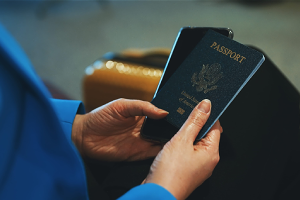 For many international travelers, leaving the United States has traditionally involved little interaction with U.S. immigration authorities. That is changing as U.S. Customs and Border Protection (CBP) expands its biometric exit system at airports and other departure locations.
For non-U.S. citizens, this means that leaving the United States may involve an immigration inspection, even when the biometric process itself takes only a few seconds.
The federal government has been developing a system to track when foreign nationals enter and leave the United States for many years.
Congress first required an entry-exit tracking system in 1996. After the September 11, 2001, terrorist attacks, the government expanded its efforts to use biometric information to verify travelers’ identities, improve national security, and enforce U.S. immigration laws.
Biometric screening upon entry has been in place for many years. Biometric screening upon departure, however, developed more gradually as CBP tested and expanded the technology.
A regulatory change that took effect on December 26, 2025, expanded the government’s authority to collect biometrics from foreign nationals when they enter or depart the United States. The rules allow biometric collection at airports, land border crossings, seaports, and other authorized locations.
CBP’s biometric exit system primarily uses facial recognition technology.
For many travelers, the process is quick and contactless. Generally, the system may:
Although this may look like a normal part of the boarding process, international travelers should understand that biometric screening can also serve as an opportunity for CBP to review immigration and law enforcement information.
Under current regulations, non-U.S. citizens may be required to provide facial biometrics when departing the United States.
This may include:
U.S. citizens are generally not required to participate in biometric exit facial comparison and may choose whether to use the technology where it is available.
Potentially, yes. Most travelers may complete biometric exit screening without any significant delay or additional questioning. However, if CBP’s systems identify a potential immigration, identity, or law enforcement issue, the traveler may be referred for additional review.
Depending on the circumstances, CBP officers may review issues involving:
In some situations, information discovered during the departure process could potentially affect a person’s visa or future admission to the United States.
Leaving the United States does not necessarily mean that immigration concerns are left behind.
For example, a traveler with a previous arrest, immigration violation, removal proceeding, visa issue, or other concern may face questions when departing. Information identified during that process could also become relevant the next time the person applies for a visa or attempts to enter the United States.
This makes it especially important for travelers with complicated immigration or criminal histories to understand their situation before traveling internationally.
If you know that an issue in your history could raise questions, having appropriate documentation available may help.
Depending on your circumstances, this could include:
The appropriate documents will depend on your individual history. Carrying documents does not guarantee that CBP will resolve an issue in your favor.
Lawful permanent residents may also encounter biometric exit screening.
A Green Card does not necessarily prevent CBP from reviewing a person’s immigration or travel history. Permanent residents with lengthy trips outside the United States, prior criminal matters, removal proceedings, or other immigration concerns may want to speak with an immigration attorney before international travel.
For most travelers, biometric exits may simply involve having a photograph taken before departure. For others, however, departure can result in additional CBP scrutiny.
If you have a prior immigration violation, criminal history, removal order, visa concern, or other issue that could appear in government records, consider speaking with an experienced immigration attorney before leaving the United States. An attorney can review your immigration history, identify potential problems, and help you understand how international travel could affect your ability to return to the United States.
If you have concerns about traveling internationally, contact our immigration attorneys at John W. Lawit, LLC before your departure so that you can understand the potential risks and prepare accordingly.
Call us today at (214) 609-2242.
This article is provided for general informational purposes only and does not constitute legal advice. Immigration laws, regulations, and government policies can change, and every case is different.