Office Location is Irving, Texas and Albuquerque, New Mexico
Stay updated on the latest immigration news and policy changes. See what's changed.
Office Location is Irving, Texas and Albuquerque, New Mexico
Published By:
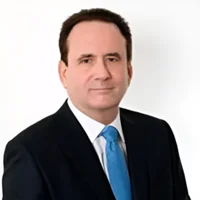
The legal information presented on this page reflects the professional oversight of Attorney John W. Lawit and the attorneys at John W. Lawit, LLC. It is provided for informational purposes only and does not constitute legal advice or create an attorney-client relationship.
At John W. Lawit, LLC, we strive to ensure the information presented here is timely and accurate. For legal guidance specific to your individual case, please contact our firm directly. Nothing in this article should be interpreted as legal advice.
Key Summary:
 The landscape of American immigration law underwent a seismic shift on June 25, 2026, when the Supreme Court of the United States (SCOTUS) handed down its highly anticipated decision in Mullin v. Al Otro Lado. In a 6–3 ruling split along ideological lines, the Court’s conservative majority affirmed the federal government’s authority to physically turn away or restrict asylum-seekers at the border before they step onto U.S. soil.
The decision is currently viewed as a turning point in a multi-year legal battle over the geographic boundaries of human rights obligations. While proponents hail the ruling as a victory for national sovereignty and border management, critics argue it creates a loophole that effectively circumvents decades of established domestic law and international treaties.
To understand the mechanics of Mullin, one must look at the specific statutory phrasing that has governed U.S. asylum law for nearly half a century. Under the Refugee Act of 1980, codified at 8 U.S.C. § 1158, the law states that:
“Any alien who is physically present in the United States or who arrives in the United States… irrespective of such alien’s status, may apply for asylum.”
The core dispute in Mullin did not center on whether asylum-seekers have a right to a hearing once they are inside the country. Instead, it hinged on a literal game of inches at international boundary lines: Can the U.S. government intentionally block individuals on the Mexican side of a port of entry to prevent them from “arriving”?
Under the executive branch policies challenged in the lawsuit, border agents frequently formed physical lines or barriers at the exact international boundary markers on international bridges. By doing so, they prevented migrants from physically stepping across the line onto U.S. territory, effectively stalling their ability to state a fear of persecution and trigger the asylum process.
Justice Samuel Alito focused strictly on a textualist interpretation of the word “in.” The Court held that the phrase “arrives in the United States” requires physical presence within the territorial jurisdiction of the country.
According to the majority, an individual standing even a single inch outside the U.S. boundary marker has not legally “arrived in” the country, and therefore, statutory asylum obligations do not yet apply.
The majority outlined three primary justifications for its ruling:
Justices Elena Kagan, Ketanji Brown Jackson, and Justice Sonia Sotomayor strongly rejected the majority’s narrow geographic distinction. The dissent argued that the majority’s ruling relies on a hyper-technical loophole that fundamentally subverts why the law was written in the first place.
When Congress passed the Refugee Act of 1980, it did so specifically to harmonize U.S. law with the 1967 United Nations Protocol Relating to the Status of Refugees, which prohibits signatory nations from returning refugees to territories where their lives or freedom would be threatened (non-refoulement).
Justice Sotomayor contended that turning away refugees at the threshold of a port of entry violates the spirit and intent of these laws. The dissent warned that the ruling provides a blueprint for future administrations to effectively abolish the right to asylum altogether simply by moving enforcement operations a few feet forward onto the international boundary line.
The Mullin decision has drawn starkly contrasting reactions from legal scholars, policymakers, and human rights advocates. For those representing asylum-seekers, the decision is viewed as a severe blow to the rule of law and an abandonment of humanitarian commitments.
Critics argue that the ruling ignores the realities of refugees fleeing immediate violence, who are now left vulnerable in dangerous Mexican border cities while waiting in unauthorized, informal lines.
Reflecting the intense frustration felt by many in the legal community, immigration practitioner and author John W. Lawit issued a highly critical assessment of the Court’s rationale immediately following the release of the opinion:
“Today the Supreme Court threw out all of its jurisprudence and treaty interpretations since 1980. In this decision, SCOTUS invented the law and made up another excuse to deprive eligible individuals of their right to apply for asylum. Since white supremacy is now the policy and law of the US government, such a policy should not be a surprise.
The SCOTUS decision prevents people from applying for asylum at the border, which was guaranteed as a matter of right under the Refugee Act of 1980. The US is a signatory to the UN Protocol on the Treatment of Refugees that guarantees the right to apply for asylum at the border. The US signed the treaty, adopted in 1979. In 1980, the President signed the Refugee Act of 1980, which explicitly allowed for the submission of asylum applications at all US borders.
Today, SCOTUS upholds white supremacy as part of US asylum law. This treaty obligation was discarded without legal justification.
This significant decision further erodes the rule of law and the rights of thousands… This decision was handed down this morning. It has a wide-ranging impact.”
Conversely, supporters of the ruling argue that the Supreme Court has properly restored order and clarity to border enforcement. Those favoring the decision point out that no sovereign nation can function without the ability to control its physical thresholds.
Proponents argue that the ruling does not eliminate asylum, but rather permits the federal government to manage the influx of migrants in an orderly fashion. The premise is that without the ability to pace or restrict entry at the absolute boundary line, they contend, ports of entry would face severe operational bottlenecks, disrupting legitimate international trade and travel.
Immigration lawyers expect the long-term consequences of Mullin v. Al Otro Lado to extend far beyond the immediate parties involved in the case. They point to three major areas where the ripple effects of this decision will be felt most acutely:
By legally sanctioning the practice of blocking migrants at the international boundary line, the Supreme Court has cleared a path for the further externalization of U.S. border enforcement. The U.S. government will likely rely more heavily on Mexican authorities to police and manage migrant populations on the southern side of the border, shifting the humanitarian and logistical responsibilities entirely to neighboring territory.
With formal access to ports of entry legally restricted by metering, humanitarian organizations predict an increase in irregular border crossings. When migrants are blocked from applying for asylum safely and legally at an official port, many turn to dangerous, remote desert crossings to ensure they physically set foot on U.S. soil, thereby triggering the “physically present” clause of the asylum statute that Mullin did not alter.
While international treaties like the 1967 UN Protocol are technically binding, domestic courts generally hold that Congress or the executive branch can dictate how those treaties are implemented within American borders. Mullin establishes a precedent that domestic geographic definitions override broader international understandings of refugee protection.
In an era where immigration policies and Supreme Court precedents can change overnight, having experienced legal counsel is more critical than ever. The changing landscape of asylum law requires a strategic, and up-to-date approach to protect your rights or the rights of your loved ones.
If you or your family members are navigating the U.S. immigration or asylum process and need guidance under these new regulations, the dedicated legal team at Lawit Law is here to help. Contact Lawit Law today at (214) 609-2242 to schedule a consultation and ensure your case is backed by decades of proven advocacy and legal expertise.