Office Location is Irving, Texas and Albuquerque, New Mexico
Stay updated on the latest immigration news and policy changes. See what's changed.
Office Location is Irving, Texas and Albuquerque, New Mexico
Published By:
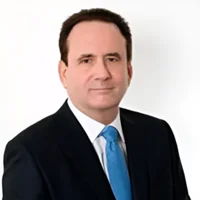
The legal information presented on this page reflects the professional oversight of Attorney John W. Lawit and the attorneys at John W. Lawit, LLC. It is provided for informational purposes only and does not constitute legal advice or create an attorney-client relationship.
At John W. Lawit, LLC, we strive to ensure the information presented here is timely and accurate. For legal guidance specific to your individual case, please contact our firm directly. Nothing in this article should be interpreted as legal advice.
By Attorney John W. Lawit and Madeline Carles, Paralegal
This article is written for educational purposes and informational purposes, and does not constitute legal advice.
Key Summary:
 nclude the termination of thousands of student records, attempts to eliminate the “duration of status” standard, and severe restrictions on both Optional and Curricular Practical Training.
Termination of SEVIS Records
The first major attack on international students came in early 2025 when U.S. Immigration and Customs Enforcement (ICE) shared National Criminal Information Center (NCIC) “hits” with the Department of State (DOS). Of the approximately 5,000 F-1 students whose Student and Exchange Visitor Information System (SEVIS) records ICE terminated, more than 3,000 had their F-1 visas revoked first. Without an active SEVIS record, these students experienced immediate disruptions, such as being unable to register for classes or continue previously authorized work.
Following at least 65 lawsuits, courts ordered ICE to retroactively reinstate the F-1 students’ SEVIS records, finding that many had not engaged in activity warranting termination. Despite these retroactive reinstatements, lingering administrative issues remain. Affected students still face challenges, including inquiries from U.S. Citizenship and Immigration Services (USCIS) questioning their status maintenance and consular officer denials for new visa applications, which generally lack judicial review options.
Elimination of Duration of Status and Added Fees
Through a final rule, the administration sought to impose a maximum four-year period of stay in F-1 status effective September 15, 2026, eliminating the nearly 50-year-old “duration of status” standard. While a federal district court order has temporarily postponed the effective date while litigation proceeds, the rule would severely impact advanced degree candidates and others needing more than four years to complete their programs. To stay longer, students would be forced to pay a minimum $420 fee and await a USCIS officer’s decision to extend their stay, jeopardizing time-limited post-graduate training.
The administration is also targeting Optional Practical Training (OPT) with exorbitant new requirements. A proposed rule would force U.S. colleges and universities to pay $70,000 before recommending an F-1 student for initial OPT, and $30,000 for any additional OPT (such as STEM extensions). The agency claims this combats fraud and abuse among employers, yet it places an enormous, potentially unlawful tax burden directly on the schools.
Disrupting Curricular Practical Training and US Contributions
The administration has further attacked Curricular Practical Training (CPT) by issuing broadcast messages that severely restrict its use, threatening schools with certification withdrawal and Designated School Officials (DSOs) with criminal penalties if they do not comply with ICE’s narrow interpretation. This move prompted a lawsuit by the Association of American Universities and other organizations to halt the enforcement. Ultimately, the administration fails to recognize that F-1 students are vital to the country. The presence and post-graduate integration of F-1 students continue to affect the U.S. by:
Immigration laws and policies can change, and individuals should consult with a qualified immigration attorney regarding their specific circumstances. If you have questions, please call John W. Lawit, LLC at 214-609-2242.